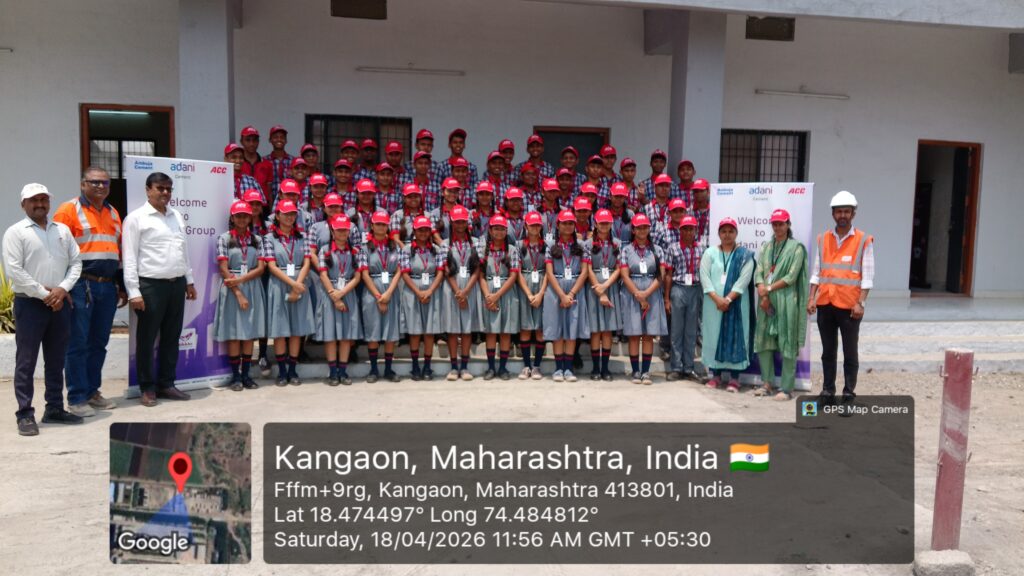
Field Visit Report: Adani Group’s Penna Cement Industries, Patas.
Organized by: Vidya Pratishthan’s Dr. Cyrus Poonawalla School (VPDCPS), Baramati
Participants: Class X Students
Date of Visit: 18-04-2026
Location: Kangaon, Patas, Pune District, Maharashtra
1. Introduction
In alignment with the academic curriculum and the school’s vision of bridging the gap between theoretical concepts and industrial application, Vidya Pratishthan’s Dr. Cyrus Poonawalla School organized a field visit to the Adani Group’s Penna Cement Factory at Patas. As Class X students, this visit aimed to enhance our understanding of chemical processes, industrial management, and the engineering marvels behind one of the world’s most essential construction materials.
2. Objectives of the Visit
- To observe the large-scale manufacturing process of cement.
- To understand the chemical reactions involved in the formation of clinker.
- To learn about industrial safety standards and environmental sustainability practices.
- To explore career opportunities in the manufacturing and engineering sectors.
3. The Manufacturing Process
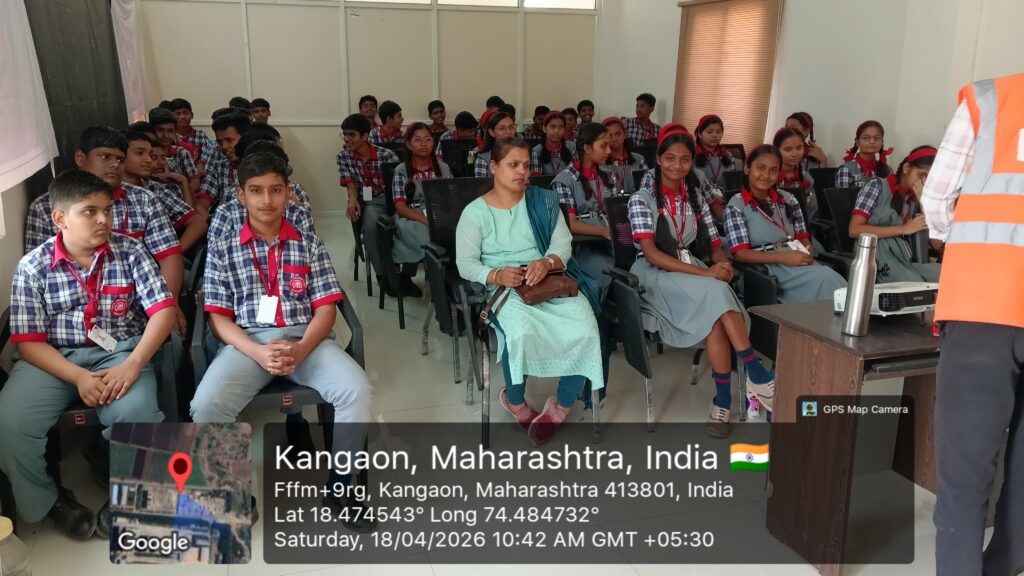
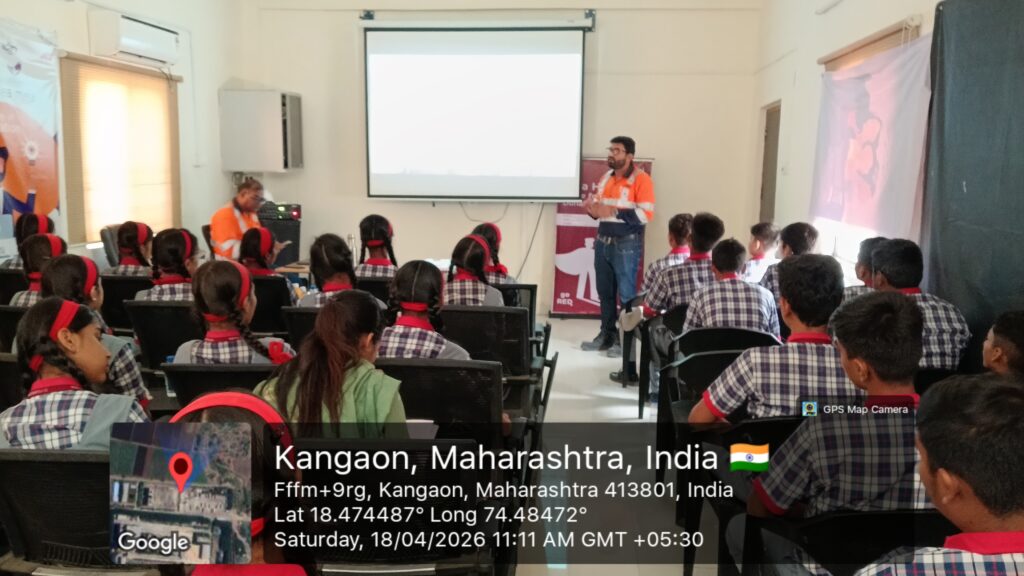
During the guided tour, students were introduced to the various stages of production. The plant engineers explained that the facility utilizes state-of-the-art technology to maintain high-quality standards.
Key Stages Observed:
- Raw Material Handling: We saw how limestone, clay, and iron ore are crushed and blended in precise proportions.
- The Rotary Kiln: The highlight of the visit was seeing the massive kiln where the raw mix is heated to approximately 1450°C. This process, known as ‘pyro-processing,’ results in the formation of clinker.
- Grinding and Additives: The cooled clinker is ground into a fine powder. We learned that gypsum is added at this stage to control the setting time of the cement.
- Quality Control Lab: Students visited the laboratory where samples are tested for compressive strength, fineness, and chemical composition to ensure they meet BIS (Bureau of Indian Standards).
4. Safety and Sustainability
The Adani Group’s Penna plant places a high priority on safety. Every student was briefed on safety protocols and provided with safety helmets and high-visibility vests.
Furthermore, the plant officials discussed their Sustainability Initiatives, including:
- Dust Suppression Systems: To minimize air pollution.
- Waste Heat Recovery: Utilizing excess heat from the kilns to generate electricity.
- Green Belt Development: The plantation of trees around the factory premises to maintain ecological balance.
5. Key Takeaways and Conclusion
The field visit was an eye-opening experience for the students. Seeing the concepts of “Thermal Decomposition” and “Neutralization” (from our Chemistry textbooks) happening on such a massive scale made the subjects much more relatable.
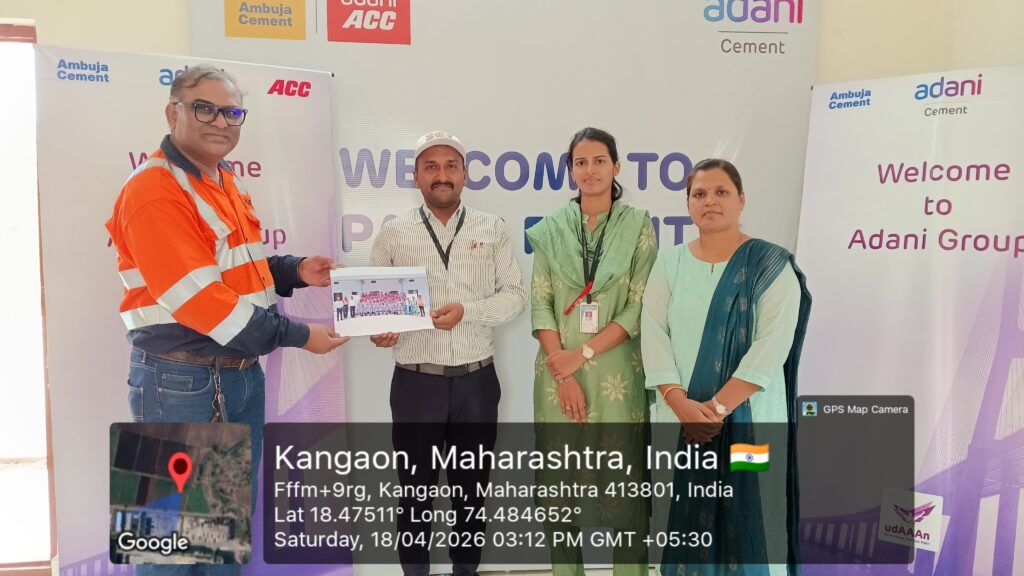
We extend our heartfelt gratitude to Principal Ms. Yashaswini Nigade and the faculty for organizing this exposure trip, and to the management of Adani Group’s Penna Cement for their hospitality and for sharing their technical expertise with us.